
Look, I’ll be straight with you. Most Rajasthan travel guides you read online sound the same. Same forts, same “land of kings” line, same list of five dishes. So instead of writing one more of those, I want to tell you what we actually tell our guests when they sit down with us at the office in Jaipur and ask, “Okay, what should we really do?”
Rajasthan is huge. Bigger than most first-time visitors expect. You cannot “do” it in four days, and honestly you should not try. Pick a few places, go slow, eat a lot, talk to people. That’s the trick.
At The Rustic Paths we’ve been running trips across the state for a while now, and this guide is basically the conversation we’d have with you over chai – the stuff that matters, the stuff that doesn’t, and a few things nobody bothers to mention.
The Forts – Which Ones Actually Deserve Your Time
There are more forts in Rajasthan than you can count. Every small town has one. But if you only have a week or ten days, these four are the ones we keep sending people to.
Amer Fort, Jaipur
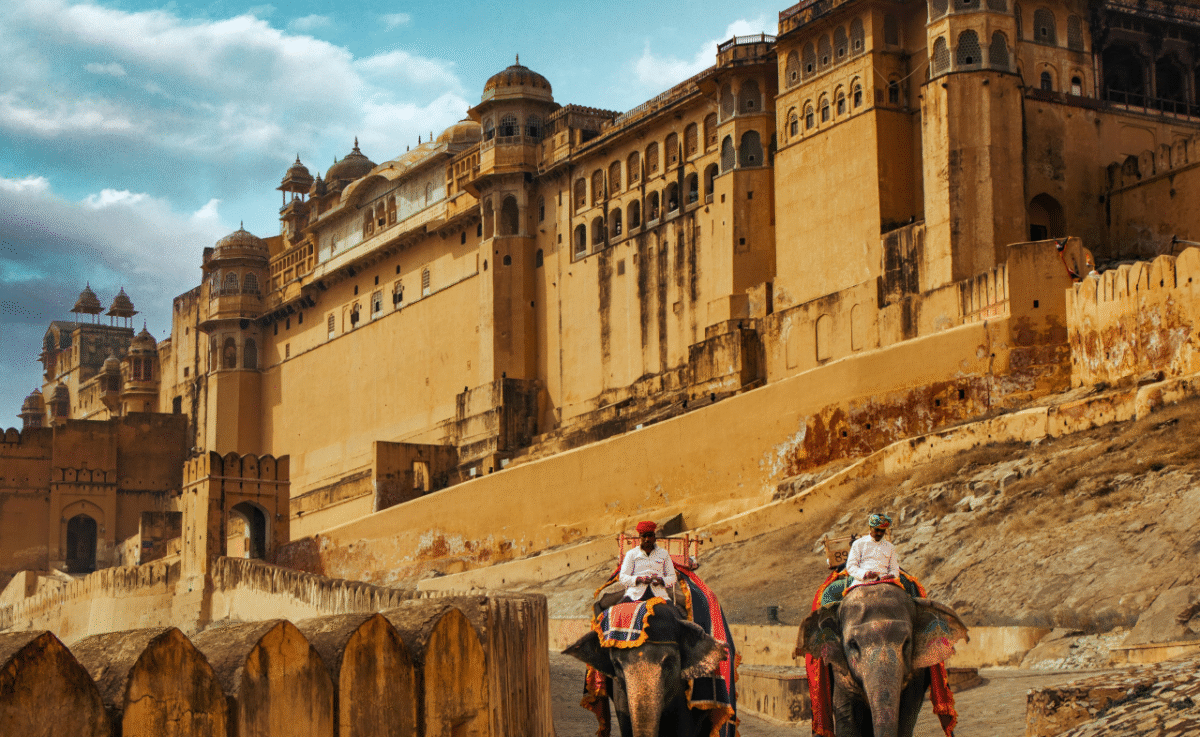
Amer is usually everyone’s first stop, and for good reason. It’s about 20 minutes from the main city, sitting up on a hill with Maota Lake right below it. The fort is a UNESCO World Heritage Site, and yes, that sounds like a line from a brochure, but walk into the Sheesh Mahal once and you’ll understand why. Thousands of tiny mirrors, all catching the light, all at once.
One tip — don’t rush it. People show up, spend 40 minutes, and leave. Give it two hours minimum. If you’re building a Jaipur sightseeing day tour around it, plan the rest of the day loosely so you’re not watching the clock inside the fort.
Mehrangarh Fort, Jodhpur
Mehrangarh is different. It’s bigger, more dramatic, and the view from the top – Jodhpur’s blue houses spreading out below you like somebody spilled paint – is one of those things that stays in your head for years.
The museum inside is actually good, which I don’t say about most fort museums. Royal palanquins, old weapons, miniature paintings. You walk through it and you get a real sense of what life here looked like 400 years ago. Give yourself half a day for Mehrangarh, not three hours.
Jaisalmer Fort
Jaisalmer is the only “living fort” in the world, meaning people still live inside it. Shops, homes, small family-run restaurants, old havelis – all tucked into these narrow sandstone lanes. At sunset the whole thing glows yellow-gold, which is where the nickname Golden Fort comes from.
Now, timing matters a lot here. We wrote a full piece on the best time to visit the Golden City of Jaisalmer because people keep showing up in May and then asking us why they’re dying. Short answer: don’t go in summer.
Hawa Mahal, Jaipur
Hawa Mahal is the one you’ve probably seen on Instagram. That pink honeycomb facade, right on a busy road in the old city. Here’s the thing though — most people just stop outside, take a photo, and move on. Which is fine. But if you actually go inside, climb up, and look out through those tiny lattice windows, you get the whole point of the building. The royal women used these windows to watch street processions without being seen. Standing there, you sort of understand a whole piece of history without anyone having to explain it.
Things Worth Doing Beyond the Forts
A Camel Safari in the Thar
Everyone says “do a camel safari.” Fewer people say how. So here’s the real deal — a one-hour ride near a tourist spot is not a camel safari. It’s a photo op. If you want the actual experience, do an overnight one from Jaisalmer or Bikaner. You ride out in the afternoon when the sun is softer, you watch the dunes turn orange, someone cooks dinner on a small fire, and then you sleep under stars that you cannot see in any city on earth. That’s the version worth your money.
The Bazaars
Johari Bazaar in Jaipur is famous for jewellery and block-printed fabrics. Sardar Market in Jodhpur, right under that old clock tower, is better for spices, bandhani dupattas, and leather. Shopping here is a little different from back home — you’re expected to bargain, but do it with a smile, not like you’re trying to catch someone out. Offer around half, settle somewhere in the middle. And if the shopkeeper offers you chai while you’re browsing, say yes. It’s a nice gesture, not a trap.
Folk Performances
Ghoomar, Kalbelia, puppet shows, fire dancers – Rajasthani folk performances are genuinely wild. Lots of heritage hotels put on evening shows during dinner, and those are fine. But if you can time your trip around a festival, even better. The energy is completely different when it’s the real thing and not a tourist version.
The Golden Triangle Question
A lot of first-timers ask whether they should combine Rajasthan with Delhi and Agra. Honestly, yes, if it’s your first trip. You get three very different flavors of India in one go. Our Golden Triangle tour packages covering Delhi, Agra and Jaipur are the standard route. And if you want a tiger in the mix – and who doesn’t — there’s also a Golden Triangle tour with Ranthambore which adds a couple of days of safari on top.
Best Time to Visit – The Short Version
October to March. That’s it. That’s the window.
Between those months, the days are warm but not painful, the evenings get cool, and you can actually walk around a fort at 2pm without wanting to lie down. November and December are probably the sweet spot. Lots of festivals happen in this window too — Diwali in Jaipur is something else, and the Pushkar Camel Fair in November is unlike anything you’ve seen anywhere.
April and May? Skip it if you can. We’ve had guests show up in May and genuinely struggle — we’re talking 44°C in Jaisalmer, sometimes more. The monsoon (July to September) isn’t bad in some places. Udaipur is beautiful when it rains, actually. But desert activities take a hit, and some rural routes become tricky.
Food — What to Actually Order
Rajasthani food is heavy. That’s not a complaint, it’s a warning. These dishes were built for people who worked in the desert and needed the calories, so come hungry.
Dal Baati Churma is the one everyone names, and yes, it’s worth eating at least once. The baati — these baked wheat balls — get dunked in ghee and served with spicy dal and a sweet crumbly thing on the side called churma. It’s a lot. Share a plate.
Laal Maas is a red mutton curry, and it’s spicy in a way that sneaks up on you. Not the Thai or Andhra kind of heat — more of a slow burn from dried red chillies. If you eat meat and you can handle some fire, don’t leave Rajasthan without trying it. Gatte ki Sabzi (gram flour dumplings in yogurt gravy) and Ker Sangri (made from desert beans and berries) are the two vegetarian classics. Both taste like nothing else you’ll eat.
For sweets — Ghewar is a monsoon special, Malpua is year-round, and a cold saffron lassi at 3pm in Jaipur summer is actually a survival tool, not a dessert.
A Few Things Nobody Tells You
Dress modestly at temples and dargahs. A light scarf or dupatta in your bag goes a long way — not because anyone will stop you, but because you’ll feel more comfortable and people are friendlier when you’ve made a small effort.
Drink water constantly. The desert air pulls moisture out of you even in winter, and by the time you feel thirsty you’re already behind. Keep a bottle on you always.
Ask before you photograph people, especially women in villages. Most folks will say yes, some will say no, and either answer is fine. It’s the asking that matters.
Desert nights in December and January get cold. Actually cold. Like, wear-a-jacket cold. Pack layers even if your trip is to “hot Rajasthan.”
And about transport — look, public buses and trains work, and backpackers use them all the time. But if you want to stop at random dhabas, take detours, or just not deal with station crowds, a private car is the way. We rent cars with drivers at reasonable rates, you can check our car rentals if that sounds useful.
For monument timings and ticket prices, the Rajasthan Tourism official portal is usually up to date. Worth a quick check the night before.
Final Thoughts
Here’s what I’ll say. Rajasthan doesn’t give you what you came for. It gives you what you didn’t expect. You arrive wanting forts and photos, and you leave remembering the old man at a chai stall who insisted on telling you his grandson’s engineering college story, or the way the light hit a sandstone wall one specific evening in Jodhpur, or the camel driver who sang a song you didn’t understand but somehow felt in your chest.
That’s the honest pitch. If you want a curated, air-conditioned, five-star version of India, there are people who’ll sell you that. But if you want the real thing – dust, colour, chai, history, people — come talk to us.
Have a look at our tour packages, or just drop us a message and tell us what you’re thinking. No pressure, no hard sell. We’ll help you figure out a trip that actually fits you.
